

Homeschooling Siblings: How to Reduce Distractions and Increase Motivation
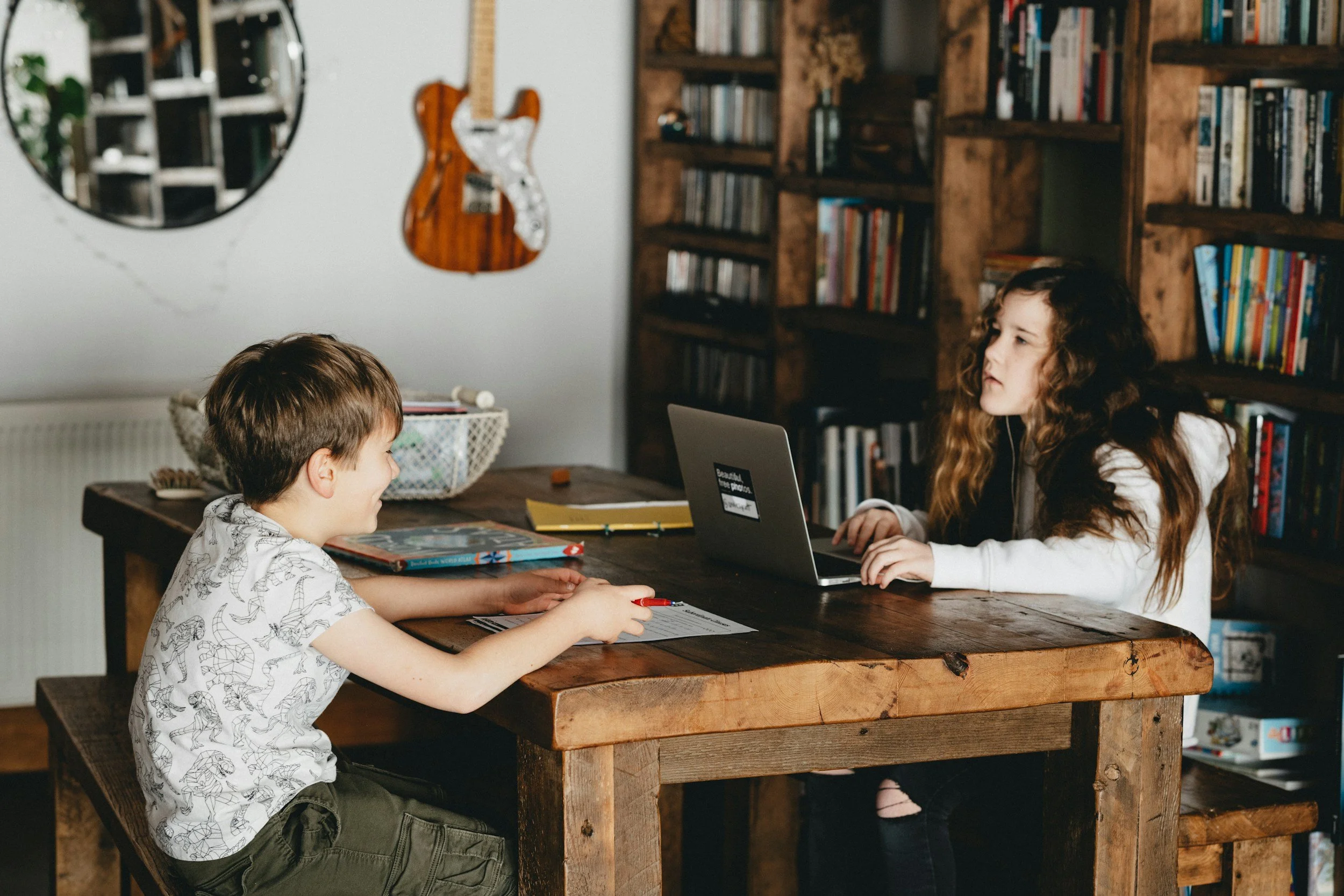
The idea of creating a quiet and flowing learning space like a school classroom is a nice thought. Usually as we attempt this, we are imagining the public schools set up with several kids all sitting at desks or a large table staying focused and working hard with little interruptions. When we try to apply this in our home, we very quickly realize that the computer class a kid is taking is distracting everyone, the reading out loud of another child is messing up the kid doing math in their head, and someone’s foot is touching someone else’s chair. As you can see the big difference between kids schooling at home and kids schooling at school is there are different ages, grades and subjects all going on at the same time instead of a single grade and subject the traditional classroom offers. At the start of a school year we seem to forget this fact once again and set all the kids around the dining room table with their books expecting different results.
To get the most out of your child’s schooling layout, we want to have them start with the longer subjects. Having a few of the most time-consuming subjects checked off early makes the rest of the subjects feel lighter. The older a child gets the more responsibility they will start to show and the more flexibility they will get to receive after showing that consistently. Depending on your child, there is usually a motivational factor we can use to our advantage as well. One kid may like to have instrumental background music while they work on a heavy reading subject such as History. Another may like to sit on the couch or in the sun patch on the floor. These are great options to implement as a reward once they get through some of the longer subjects. It also gives the kids a chance to have less distractions at the table with the remaining siblings.
Keeping the kids in neutral areas instead of their bedrooms for learning will help keep them on track. Distractions come in all sizes and when a child knows that “out of sight is out of mind” they can slack off for much longer because parents don’t check in as often. The great thing about these flexibility rewards is it is very easily put in the kids control. They work hard on the couch in their own space or they come back to the table.
The older a child gets they naturally will create their own motivations to stay focused. This could be finishing the day’s work a few hours early, a subject a few months early, or graduating early. The beauty of homeschooling is it really puts a lot of power back into the kids hands. They may not get to choose the core curriculum, but they can choose how long it takes them to complete it. Public schools have no way for the student to maximize their time. The class is 50+ minutes regardless if they finish with their class work and homework early. Reminding our kids the differences between public school and home school naturally will encourage them to use their time to the max efficiency. Getting done on time or early opens up extra time for other interests, a part time job, or relaxing time.
For the younger kids under 9 they still need a lot of one-on-one attention. You can try to stagger the mini 5-minute breaks each child gets so that it gives a bit more time to focus one-on-one. Utilizing the flexibility rewards of sitting in the sun patch by the window four feet away goes a long way with creating extra space between the kids and giving them opportunities to show that they can work hard on their own in that privileged area. And when all else fails, earmuffs from the hardware store work great for the child that just can’t focus while their sibling reads or counts out loud.
Limiting distractions and irritations between siblings is only half the battle to a peaceful school day. A lot also rides on the parents attitude. Yes, there will be times where a happy and calm parent is still dealing with a moody and defiant kid who doesn’t care how long their schooling takes that day. But more times than not there are things that pile onto the kids that very quickly turn their neutral attitude into a bad one. Things like asking why they aren’t done with their teeth and getting dressed before we say “Good morning” and give them a hug. Using phrases like “Why are you taking so long on this? You know what you need to do,” instead of “Let’s take a break from this subject and jump on another one for a while.” As parents we have a lot of sway in the home with our energy. If we don’t keep it in check then it is easier for the kids to feed off of that and start to mimic it themselves. It would be nice if our mood stayed our mood, but in reality, it is contagious and kids start to feel entitled to be frustrated, anxious, or impatient themselves too.
Our approach as parents should be one of helping, but not coddling. Having us sit next to them while we watch them do their work many times backfires. The kid feels smothered and starts to delay even more. Instead we can have “projects” that we are working on that happen to be in the same room. We are busy doing our work and the kids have the space to do theirs. Using phrases like “What’s the next question?” or “Keep going” instead of “Stop looking at your brothers book” will come across as encouraging instead of nagging. Paying attention to our kids subtle emotional changes will help us steer them in the positive direction before it spirals. We know our kids, their weaknesses and strengths. We know when they need an encouragement, a distraction, or a firm word and the “Mom Look.” Between these and the flexibility rewards listed above we can really create a rhythm of schooling success.
Homeschooling is one of the hardest and rewarding jobs a parent can do. But with the right tools and foresight we can avoid the biggest hurdles and make the process enjoyable for everyone. Keep growing.